Choosing the right window type affects how a home feels, functions, and performs over time. Windows influence ventilation, daylight entry, energy efficiency, and even the visual character of the building. Because of this, homeowners often compare different window styles before making a decision. One of the most common comparisons is casement vs fixed windows, especially when planning living rooms, bedrooms, or larger façade openings.
Both window types serve very different purposes. Casement windows open outward on hinges and support strong ventilation, which makes them useful in areas where airflow matters. In contrast, fixed windows remain sealed within the frame and focus on bringing daylight and outdoor views into the space. Understanding the difference between casement and fixed windows helps homeowners decide which option works best for each part of the house.
Many modern homes also combine these systems within a single opening. A casement and fixed window combination can deliver the benefits of both ventilation and uninterrupted glass views. When homeowners evaluate casement windows or fixed windows, the decision usually depends on ventilation needs, design preferences, and the intended function of the room.
Key Takeaways
- The difference between casement and fixed windows lies in function. Casement opens for airflow, fixed remains sealed for views.
- Casement windows are preferred in rooms where ventilation and fresh air matter.
- Fixed windows work best in spaces focused on daylight and unobstructed outdoor views.
- Understanding casement vs fixed windows helps homeowners choose the right window for each room.
Table of Contents
What is a Casement Window?
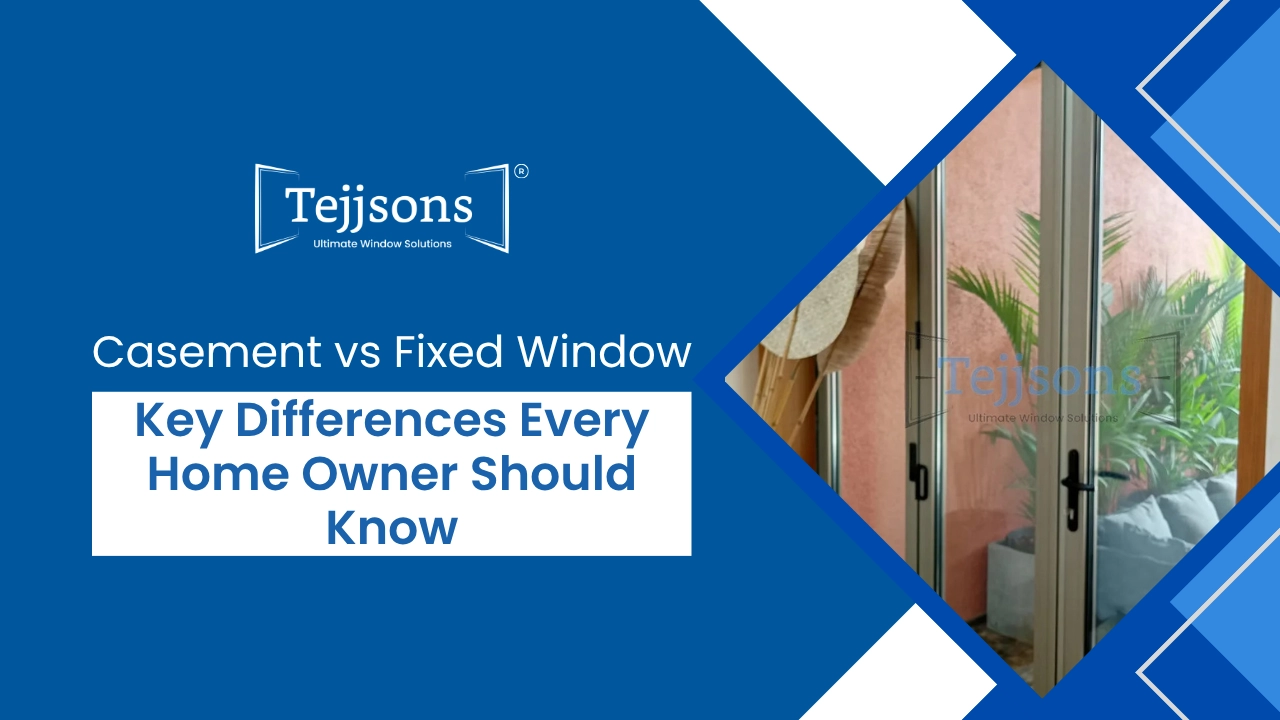
A casement window is a window that opens outward or inward on side hinges, similar to the movement of a door. The sash attaches to the frame on one side and swings open when operated through a handle or crank mechanism. Because the entire panel opens, this type of window creates a clear opening that supports strong airflow into the room. In many homes, casement windows appear in bedrooms, kitchens, and living areas where ventilation is important.
Architects often choose aluminium casement windows when the design requires controlled airflow and practical usability. Since the sash opens completely, the window can capture passing breezes and direct them into the interior space. This is why many homeowners consider casement windows or fixed windows carefully when planning ventilation strategies in their homes.
Casement systems also work well in combination with other window types. Designers sometimes use a casement and fixed window combination where the operable casement panels sit beside a fixed glass section. This arrangement improves both ventilation and daylight, especially in larger window openings.
What is a Fixed Window?
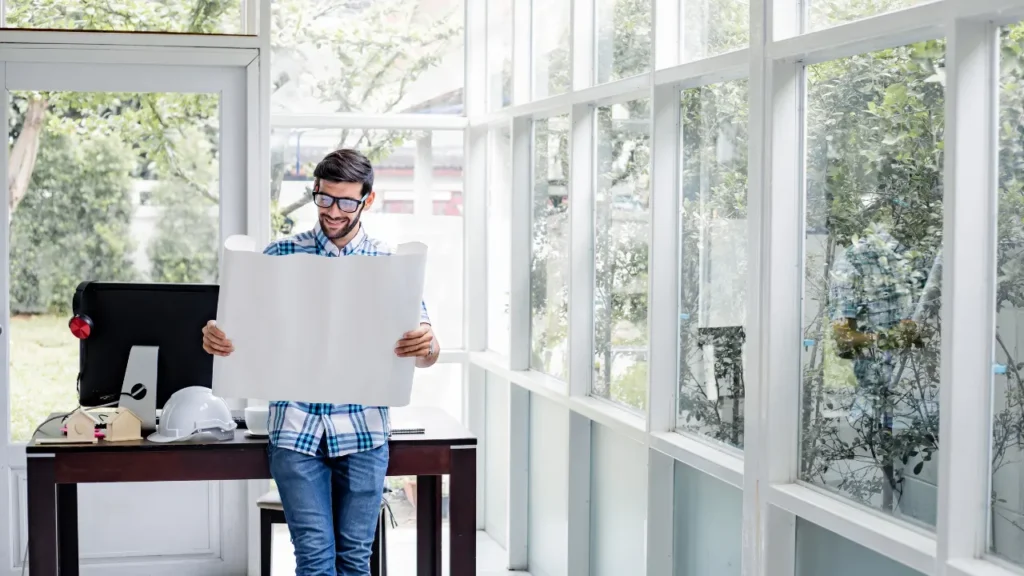
A fixed window is a non-operable window that remains permanently closed within the frame. Unlike casement systems, the glass panel does not open or move. Its primary function is to provide natural light and outdoor views rather than ventilation. Many homeowners refer to these windows as picture windows because they frame outdoor scenery like a visual display.
Fixed windows are commonly used in living rooms, staircases, and large façade openings where unobstructed views are the priority. In many modern homes, designers install fixed windows to create large glass surfaces that bring daylight deep into interior spaces. Because they have no moving components, these windows maintain a simple structure and uninterrupted glass appearance.
When comparing fixed windows vs casement windows, the key difference lies in functionality. Fixed systems focus on daylight and visual openness, while casement systems prioritise ventilation and airflow. This difference plays a central role in the broader comparison when selecting window types for homes.
Advantages and Disadvantages of Casement Windows
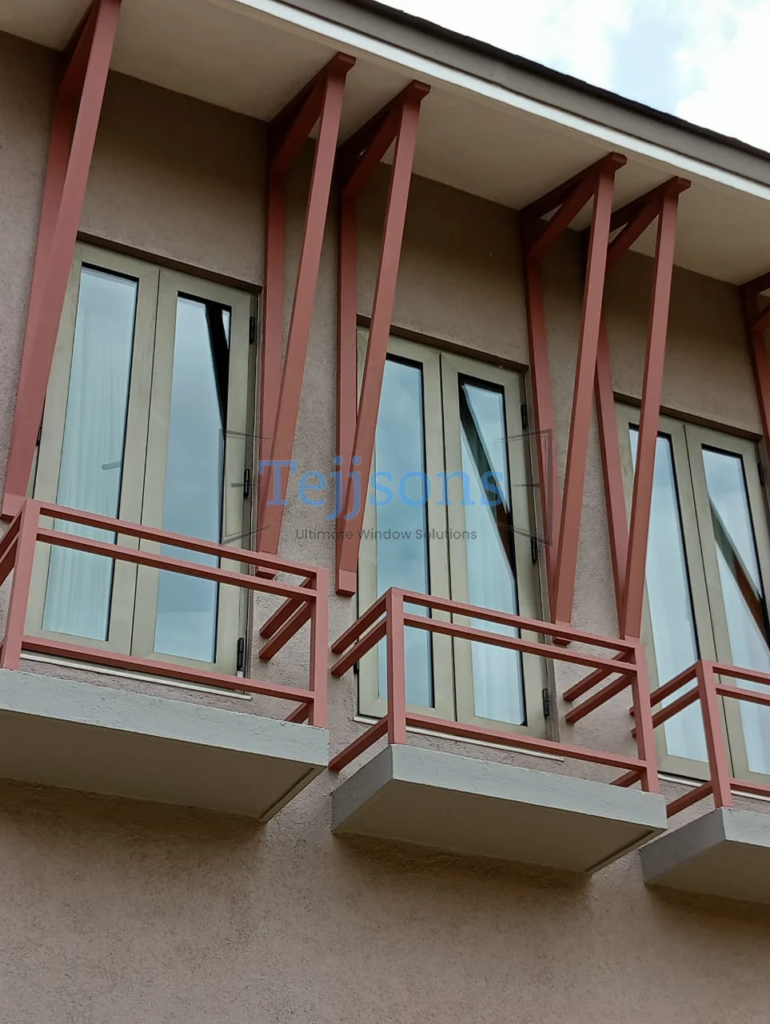
Casement windows are widely used in residential architecture because they combine ventilation with functional ease. Their hinged design creates a large opening when the sash swings outward, which improves airflow inside the room. These premium and quality aluminium windows are great if you’re looking for something traditional yet modern and sophisticated. However, like every window system, casement windows also have certain limitations that homeowners should consider before installation.
Advantages of Casement Windows
Casement windows are often selected in homes where ventilation and ease of operation are important. Their opening mechanism helps capture outdoor breezes and direct them inside, which improves comfort in warmer climates. The following points explain the advantages of casement windows.
- Excellent airflow control: Fully opening panels improve ventilation compared to many other window types.
- Better sealing when closed: The compression seal around the frame helps prevent outside air leakage.
- Clear outdoor views: Large single glass panels create unobstructed sightlines to the exterior.
- Suitable for multiple room types: Bedrooms, kitchens, and living areas commonly use casement windows because they balance ventilation and daylight.
- Works well with mixed window layouts: Designers often combine casement windows with fixed glass sections in larger openings.
Disadvantages of Casement Windows
While casement windows offer several benefits, they may not suit every architectural situation. Certain structural and placement limitations should be considered when comparing casement vs fixed windows.
- Requires exterior space to open: Hinged panels swing outward, which may interfere with balconies or walkways.
- Hardware maintenance: Hinges and operating mechanisms require periodic inspection to maintain smooth movement.
- Wind exposure risk: Strong winds may place pressure on open panels if the window faces exposed outdoor areas.
- Not ideal for very large openings: Extremely wide openings may require other window types like sliding windows or a casement and fixed window combination to maintain structural balance.
Read Next: Casement Windows vs Sliding Windows: Which One is Better for Luxury Homes?
Advantages and Disadvantages of Fixed Windows
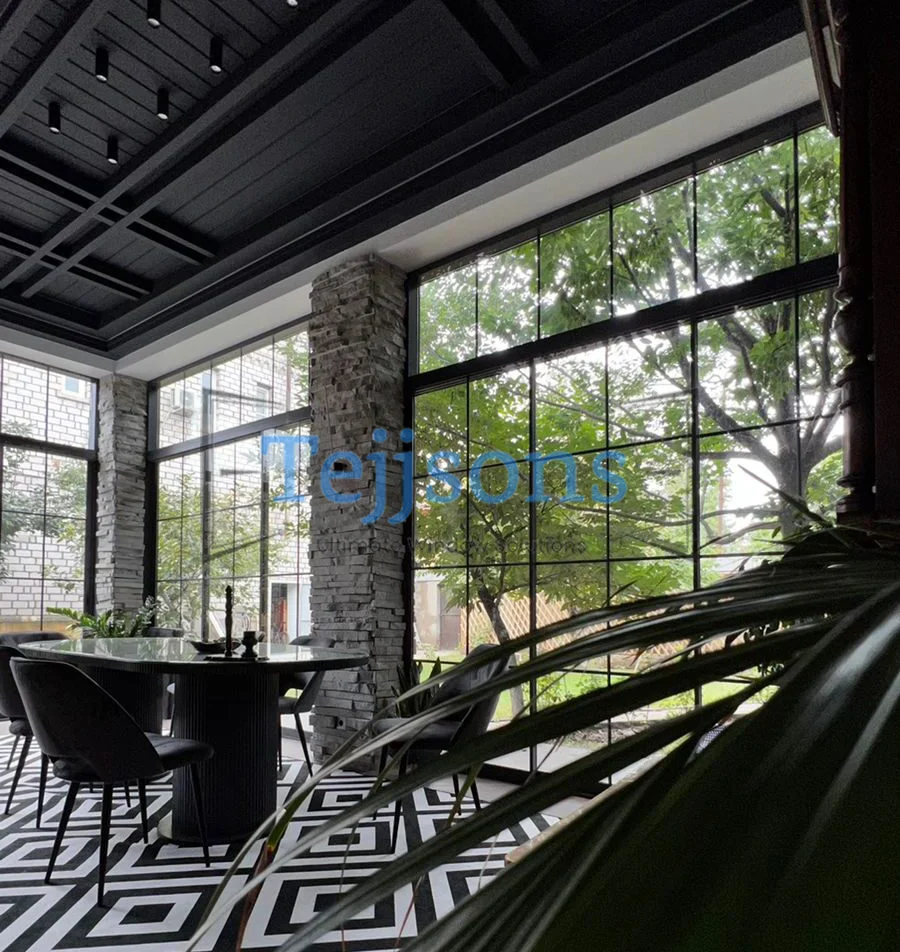
Fixed windows are commonly used in homes where natural light and outdoor views are more important than ventilation. Because the glass panel remains permanently sealed within the frame, the window structure stays simple and visually clean. Many architects use fixed windows in living rooms, staircases, and façade openings where uninterrupted glass surfaces improve the overall appearance of the building.
Advantages of Fixed Windows
Fixed windows serve a specific purpose in residential design. They maximise daylight and create clear outdoor views without the need for moving parts. The following points highlight the advantages of fixed windows.
- Uninterrupted outdoor views: Large glass panels create a clear visual connection with the outside environment.
- Stronger energy performance: Because the frame does not open, fixed windows usually maintain tighter sealing against outside air.
- Low maintenance structure: The absence of hinges or handles means fewer mechanical components to maintain.
- Suitable for large glass areas: Architects frequently use fixed windows in modern homes to create expansive glazing sections.
Disadvantages of Fixed Windows
Although fixed windows offer visual benefits, they do have functional limitations. These considerations become important when evaluating fixed windows vs casement windows.
- No ventilation capability: Fixed windows cannot open, which means they do not support airflow into the room.
- Cleaning challenges: Exterior glass surfaces may be harder to clean on upper floors or in large façade openings.
- Limited flexibility in design usage: Some spaces require ventilation, which means fixed windows cannot serve as the only window type.
You May Also Read: How Aluminium Windows Improve Natural Ventilation in Modern & Luxury Homes
- Often used with other window systems: Designers frequently pair them with operable windows, such as in a casement and fixed window combination, to balance ventilation and views.
Casement vs Fixed Windows: Key Differences
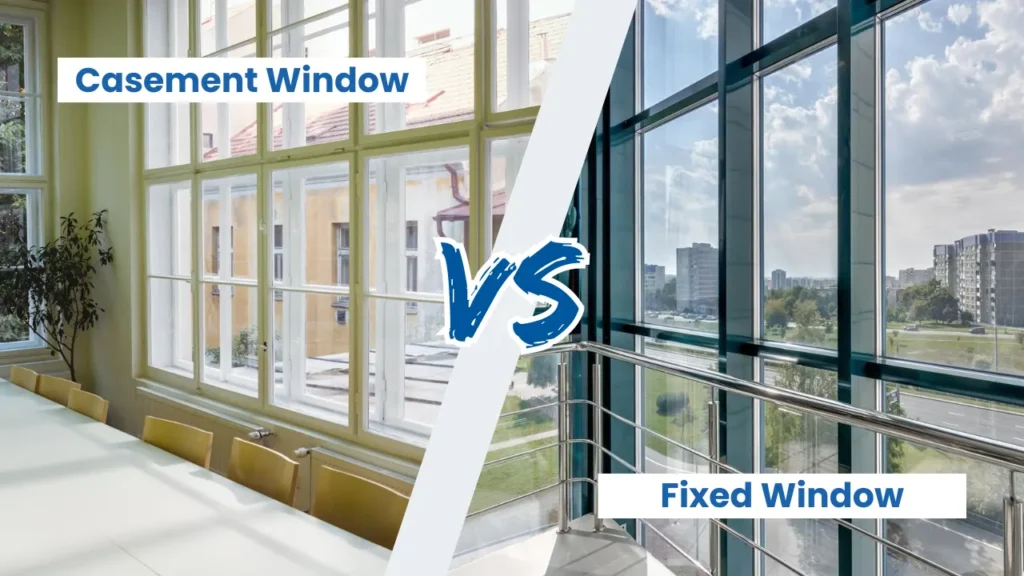
When homeowners compare architectural window design options, the decision often comes down to how the window will function in everyday use. Both styles serve different purposes within residential design. Casement windows focus on ventilation and airflow, while fixed windows concentrate on daylight and uninterrupted views. Understanding the casement vs fixed windows comparison helps homeowners choose the right option for each room.
Below is a simplified overview highlighting the difference between casement and fixed windows.
| Feature | Casement Windows | Fixed Windows |
|---|---|---|
| Operation | Opens outward on side hinges | Permanently sealed and non operable |
| Ventilation | Provides strong airflow when open | Does not support ventilation |
| Energy sealing | Good sealing when closed due to compression fit | Excellent sealing since there are no moving parts |
| Maintenance | Hinges and handles require occasional maintenance | Considerably low maintenance because there are no moving components |
| Typical usage | Bedrooms, kitchens, areas needing airflow | Permanently sealed and non-operable |
| View | Slight frame interruption due to opening sash | Completely unobstructed glass views |
| Example layout | Ventilation-focused openings | Picture window style installations |
For many modern homes, architects often recommend a casement and fixed window combination to achieve both ventilation and large glass views within the same window opening.
You May Also Read: Georgian Bar Windows vs Astragal bars: What to Choose?
Cost Comparison Between Casement and Fixed Windows
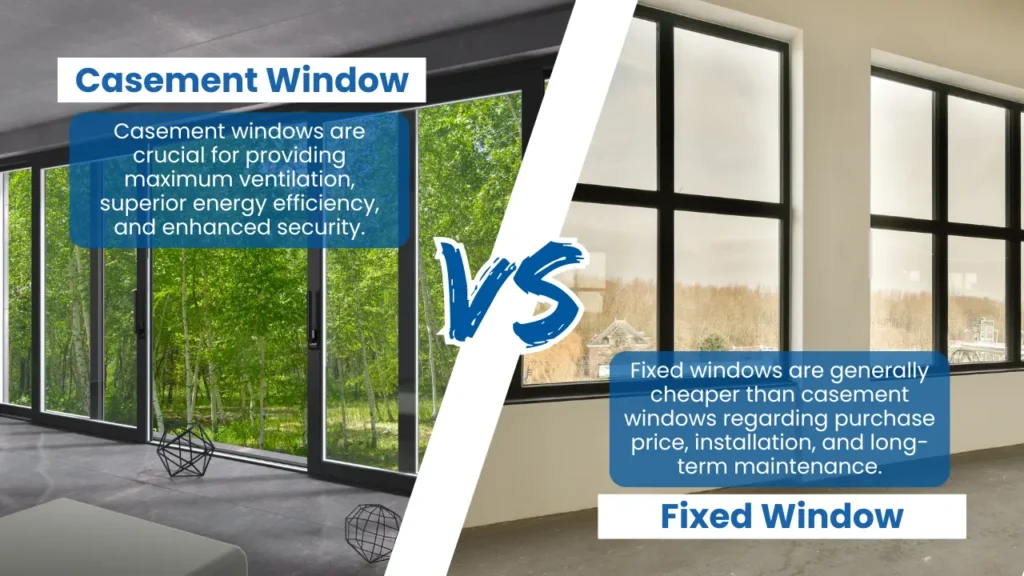
The overall cost of a window system depends on several factors, such as frame material, glazing specification, hardware quality, and installation complexity. Casement windows generally involve more components because they open and close through hinges and locking mechanisms. Fixed windows have a simpler construction since the glass remains sealed within the frame. When evaluating casement vs fixed windows, the cost difference usually reflects this variation in hardware and functionality.
Homeowners should also consider long-term value when comparing these window types. Casement windows provide ventilation and flexibility in everyday use, which adds functional value to the home. Fixed windows, on the other hand, are primarily used for daylight and unobstructed views. For many modern homes, architects often recommend combining both systems to balance ventilation, aesthetics, and budget.
| Comparison Factor | Casement Windows | Fixed Windows |
|---|---|---|
| Long-term usability | Provides ventilation and airflow when opened | Designed mainly for daylight and views |
| Hardware complexity | Includes hinges, handles, and locking systems | No moving hardware components |
| Installation complexity | Requires precise alignment for opening mechanism | Simpler installation due to fixed structure |
| Practical usage | Suitable for rooms that require airflow | Suitable for spaces focused on views or daylight |
| Design versatility | Works well in a casement and fixed window combination | Often paired with operable windows |
| Long-term usability | Offers both ventilation and daylight | Provides daylight but no airflow |
Maintenance and Life Span
The durability of a window system depends on its material quality, hardware components, and how frequently it is used. Both casement windows and fixed windows can easily last for at least 2-3 decades when manufactured properly and installed with care. Since casement windows include hinges and locking systems, they require occasional inspection to keep the operating mechanism smooth. Fixed windows have fewer mechanical components, which means they generally require less maintenance.
In most homes, routine care focuses on cleaning glass surfaces and checking frame integrity. Proper maintenance also helps extend the lifespan of aluminium window frames used in modern window systems.
Typical maintenance considerations include:
- Cleaning frequency: Both window types require regular cleaning to maintain glass clarity and frame appearance.
- Hardware inspection: Hinges and handles in casement systems should be checked periodically to maintain smooth movement.
- Seal condition: Rubber seals and gaskets should remain intact to prevent dust and moisture entry.
- Frame durability: Aluminium frames resist corrosion and usually maintain structural stability for many years.
- Glass care: Large glass panels in fixed windows should be cleaned carefully to preserve visibility and aesthetics.
When comparing fixed windows vs casement windows, fixed systems typically involve less mechanical upkeep, while casement windows provide the added advantage of ventilation along with regular maintenance needs.
You May Also Read: Georgian Bar Windows vs Astragal bars: What to Choose?
Security and Safety Considerations
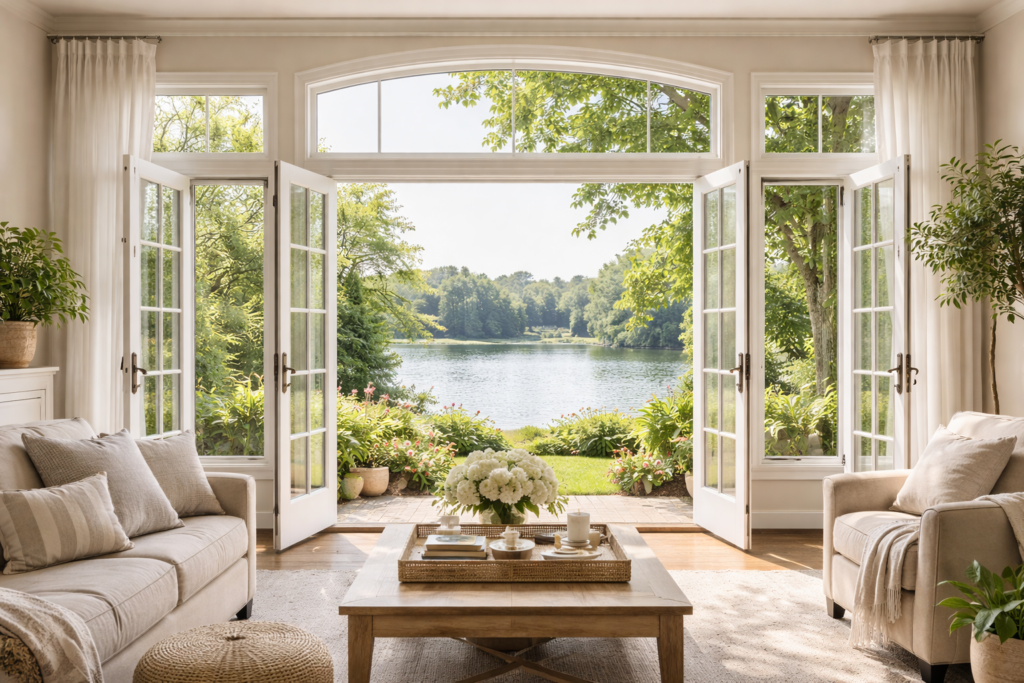
Security plays an important role when choosing between different window types. Homeowners often evaluate how well a window protects the house while maintaining usability. Both window systems can be secure when manufactured with strong frames, quality hardware, and proper installation.
The main safety differences between casement vs fixed windows relate to their opening mechanisms.
- Locking systems: Casement windows usually include multi-point locks that secure the sash against the frame.
- Non-operable structure: Fixed windows remain permanently sealed, which makes forced entry more difficult.
- Glass selection: Laminated or toughened glass improves safety in both window systems.
- Installation quality: Proper frame anchoring is essential for maintaining structural stability.
- Placement considerations: Windows installed at accessible heights may require stronger locking hardware.
With proper glazing and frame construction, both window types can meet the safety expectations of modern residential buildings.
Design Flexibility and Aesthetic Impact
Suitable window design has a strong influence on the overall architectural appearance of a home. Different window types create different visual effects across façades and interior spaces. When evaluating casement vs fixed windows, designers consider how each style contributes to the overall composition of the building.
Casement windows add visual movement to a façade because of their opening panels. They often appear in bedrooms, kitchens, and living areas where ventilation is important. Fixed windows, on the other hand, emphasise large glass surfaces and unobstructed views.
Design considerations often include:
- Glass visibility: Fixed windows create uninterrupted views since there are no opening panels.
- Ventilation capability: Casement windows provide airflow while maintaining clear outdoor sightlines.
- Façade composition: Architects often combine operable windows with fixed glass sections for balanced design.
- Interior brightness: Larger glass panels increase daylight inside living spaces.
- Layout flexibility: Many homes use a casement and fixed window combination to balance ventilation and aesthetics.
When to Choose Casement Windows
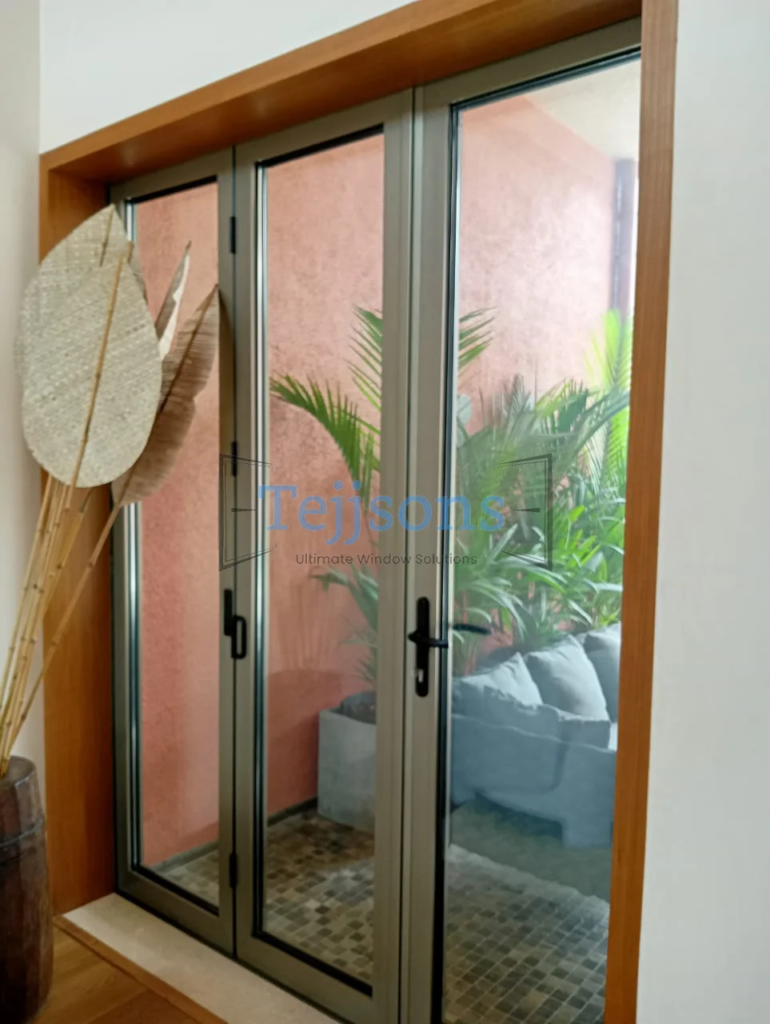
Casement windows are a practical choice in areas of the home where ventilation is a priority. Their side-hinged design opens the entire window panel, which helps fresh air enter the room more effectively. In spaces such as bedrooms, kitchens, and study areas, this functionality makes a noticeable difference in everyday comfort. When homeowners evaluate casement vs fixed windows, casement systems often stand out in rooms that require both daylight and airflow.
Another advantage of casement windows is their compatibility with modern residential layouts. They integrate easily with different façade styles and work well with a wide range of frame materials and glazing options. Many architects also recommend them for rooms where controlled airflow is needed during warmer months. This flexibility explains why they remain one of the most widely used aluminium window types in residential design.
Use casement windows for:
- Rooms that require regular ventilation
- Bedrooms or kitchens where airflow improves comfort
- Spaces where windows must open fully
- Homes planning a casement and fixed window combination for larger openings
- Areas where both ventilation and outdoor views are important
You May Also Read: 9+ High-End Window Designs for Maximum Natural Light & Ventilation
When to Choose Fixed Windows
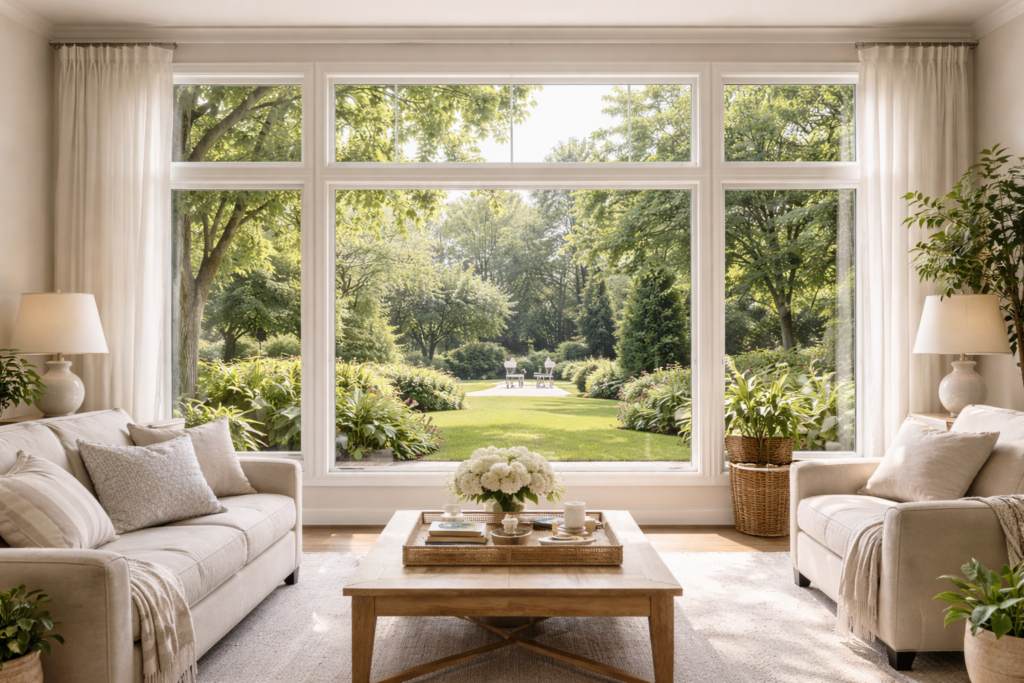
Fixed windows work best in spaces where the priority is daylight and uninterrupted outdoor views. Since these windows remain sealed within the frame, they create large glass surfaces that bring natural light deep into interior spaces. In living rooms, staircases, and double-height areas, fixed windows often become architectural features that frame the exterior landscape while keeping the interior visually open.
Homeowners also choose fixed windows when ventilation is already handled by other openings in the room. Because the glass remains permanently sealed, the frame structure stays simple and visually clean. This design works especially well in modern homes that emphasise large glass areas and a low amount of framing. When evaluating casement vs fixed windows, fixed systems often stand out in spaces designed around views and daylight rather than airflow.
Use fixed windows for:
- Living rooms designed around outdoor scenery
- Double-height spaces that require large glass surfaces
- Staircases where daylight improves visibility
- Areas where ventilation is not required
- Architectural designs that highlight uninterrupted glass views
Conclusion
Understanding the casement vs fixed windows comparison helps homeowners choose the right window type for different areas of the house. Casement windows focus on ventilation and everyday usability, while fixed windows are designed primarily for daylight and unobstructed views. The choice depends on how the room functions. Spaces that require airflow benefit from operable windows, while areas designed around scenery or architectural glass features often use fixed systems.
At Tejjsons, we specialize in manufacturing high-quality windows & doors engineered for durability, smooth operation, and long-term performance. As the best aluminium window manufacturer, our casement window systems are designed with strong aluminium profiles, precise fabrication standards, and refined finishes suited for modern residential architecture. By focusing on operable window systems that deliver ventilation and functionality, we help homeowners choose solutions that perform reliably for many years.
Book a consultation with us today to explore expertly made casement window systems for your home.
FAQs
-
Do casement windows provide better ventilation?
Yes, casement windows open fully on side hinges, which creates a larger opening for airflow. This design helps fresh air move directly into the room and improves indoor ventilation. Many homeowners prefer casement windows in bedrooms and kitchens because they provide stronger airflow compared to non-operable window types.
-
Are fixed windows more energy efficient?
In many cases, fixed windows can achieve strong energy performance because the glass panel remains permanently sealed within the frame. Since there are no opening components, the window structure stays tightly closed and reduces air leakage. However, the overall energy efficiency still depends on frame material, glass specification, and installation quality.
-
Can both window types be installed together?
Yes, many homes use both systems depending on the purpose of the space. When homeowners compare casement windows or fixed windows, they often choose casement windows for ventilation-focused rooms and fixed windows for areas where large glass views are preferred.
-
What type of window is most secure?
Security depends on frame strength, locking systems, and glass specification. Casement windows usually include multi-point locking hardware that secures the sash against the frame. Fixed windows also provide strong security because they do not open and have no moving parts that can be forced open.
-
Are casement windows harder to maintain than fixed windows?
Casement windows require slightly more maintenance because they include hinges and operating hardware. These components should be inspected occasionally to maintain smooth operation. Fixed windows generally require less maintenance since they do not contain moving parts.
-
Are casement windows outdated?
No, casement windows remain widely used in modern homes because they provide effective ventilation and clear outdoor views. Many contemporary residential designs continue to use them due to their practicality and clean appearance.
-
Are fixed windows cheaper than casement windows?
In most cases, fixed windows cost less because they do not require hinges, locking hardware, or operating mechanisms. Casement systems include these additional components, which increase manufacturing and installation costs.
-
Which lasts longer, casement or fixed windows?
Both window types can last for many years when built with durable materials such as aluminium. Since fixed windows have no moving parts, they often require less maintenance over time. However, high-quality casement windows can also perform reliably for decades.
-
Are casement windows good for bedrooms?
Yes, casement windows are often installed in bedrooms because they open widely and provide strong airflow. This improves comfort and fresh air circulation during warmer months.
-
Which window is best for a living room?
The choice between fixed and casement windows depends on the design goal of the space. Fixed windows are often used in living rooms to create large glass views, while casement windows are selected when ventilation is also required.
-
Are casement windows soundproof?
Standard casement windows are not completely soundproof, but they can reduce outside noise when combined with proper sealing and high-quality glazing. Acoustic glass can further improve sound insulation in busy urban areas.