Hotels and resorts invest heavily in outdoor spaces because these areas shape first impressions and guest experiences. A well-designed seating zone, pool deck, or garden lounge can influence footfall, dining capacity, and overall ambience. This is why property owners often compare pergola vs gazebo structures before redesigning open-air areas.
Both options take outdoor spaces to the next level, but they serve different goals. A pergola creates an open, breathable frame that brings light and shade together. A gazebo offers full coverage and a more enclosed retreat. The right choice depends on usage, climate, design expectations, and long-term upkeep.
Understanding the difference between pergola and gazebo helps hotels and resorts plan structures that improve comfort, increase seating, and raise the overall value of the property. In this guide, we break down all key points that matter to commercial spaces, from durability and cost to maintenance and real-world performance.
Key Takeaways
- Hotels and resorts often compare pergola vs gazebo structures to plan outdoor seating, relaxation zones, and guest amenities.
- A pergola supports open, airy layouts with flexible shade and strong design compatibility for modern architecture.
- A gazebo offers full overhead coverage and suits private lounges, spa cabanas, and sheltered garden corners.
- Both structures improve the value and usability of outdoor spaces when planned with climate and guest expectations in mind.
- Maintenance, cost, and visual impact vary between the two, so property needs and long-term goals guide the final choice.
- Each option works well for commercial hospitality settings when integrated thoughtfully into overall landscape planning.
- Long-term performance depends on material quality, installation standards, and maintenance practices for each structure.
Table of Contents
What is a Pergola?

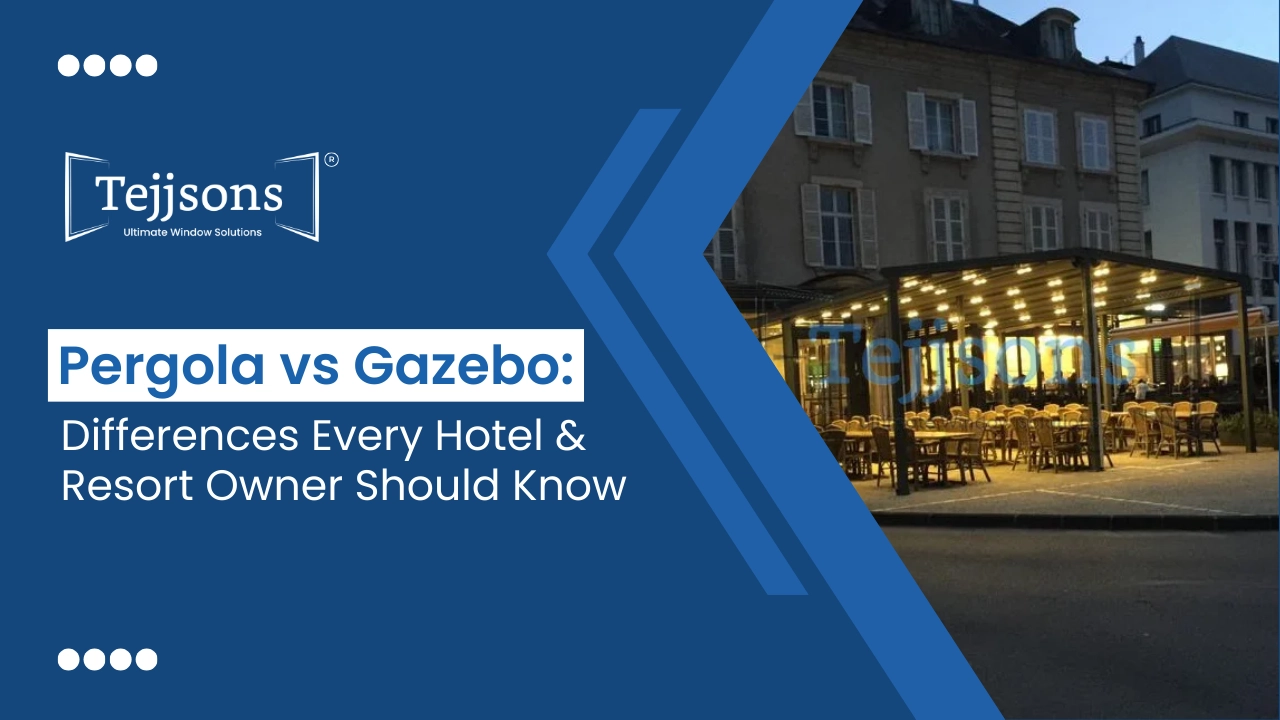
A pergola is an open outdoor structure designed to create partial shade and a defined seating or walkway zone. It features vertical posts that support a roof made of slats or louvres. Many hotels now install a pergola to shape outdoor dining areas, poolside lounges, or open garden pathways.
Modern versions include motorized pergola systems that shift from open to closed positions based on sunlight or rain. This makes a pergola a practical choice for resorts that want flexible shade without blocking natural airflow.
A contemporary outdoor pergola blends well with luxury architecture because it adds structure without creating a fully enclosed space. Hotels often use it to frame views, create cabana-style seating, or extend usable space during warm seasons. With low pergola maintenance needs and strong weather resistance, it is ideal for high-traffic commercial environments.
What is a Gazebo?

A gazebo is a covered outdoor structure with a solid roof that provides full shade and complete overhead protection. It works well in gardens, pool decks, and quiet corners where guests want privacy and shelter. Many hotels choose a gazebo when they need a more enclosed space for spa lounges, outdoor dining pods, or small event areas. The structure blocks the sun and rain, giving guests a comfortable place to relax.
Gazebos vary in shape and size, from classic round pavilions to square and octagonal models. They offer stronger protection than pergolas, but they block more light and air movement. Gazebo maintenance depends on the material but often includes cleaning the roof, structural checks, and seasonal touch-ups. For commercial use, gazebos create cosy, sheltered zones that enhance the premium feel of a resort landscape.
Features and Uses of Pergolas and Gazebos
Outdoor structures play a major role in shaping how hotels and resorts structure open-air dining, lounges, pool decks, and relaxation zones. Both pergolas and gazebos improve guest comfort, but each one brings a different level of shade, coverage, and visual impact. Understanding their features helps property owners plan spaces that feel organised and inviting.
Pergola -Key Features and Uses
A pergola supports open, breathable spaces that feel bright yet structured. Hotels often use them to bring shade, rhythm, and balance to large outdoor areas without blocking airflow.
- Open Roof Structure: A pergola offers partial shade while still letting natural light filter through in a comfortable way.
- Flexible Layout Options: Pergolas in hotels and restaurants are often used for dining, lounging, walkways, or poolside seating, depending on the property layout.
- Modern Architectural Appeal: A contemporary outdoor pergola fits well with luxury architecture because the structure looks light and minimal.
- Motorisation Support: A motorized pergola adjusts its slats to suit different times of the day, giving guests better comfort.
- Commercial Space Expansion: Many resorts use a pergola to extend usable seating areas without building heavy walls or enclosed sections.
Gazebo – Key Features and Uses
A gazebo creates a more enclosed environment that feels sheltered and private. It works well for areas where guests need shade, calm, or a space removed from open crowds.
- Full Roof Coverage: A gazebo blocks direct sunlight and rain, giving guests strong overhead protection.
- Private and Cosy Ambience: Gazebos help create quiet seating corners that feel exclusive and relaxing.
- Defined Structural Presence: The design introduces a stand-alone feature that stands out visually in gardens and lawns.
- Multiple Shape Options: The shape of a gazebo can be circular, square, or octagonal, depending on the architectural theme of the property.
- Ideal for Retreat Zones: Many hotels place gazebos near spas or garden pathways to give guests peaceful resting points.
Benefits of Pergolas

A pergola adds structure and comfort to hotel and resort outdoor areas. It introduces shade, improves the layout, and supports modern hospitality design. The open frame keeps spaces bright and breathable while still giving guests a comfortable place to relax or dine.
Hotels value pergolas because they help shape outdoor experiences without the heaviness of a fully enclosed structure.
- Creates Structured Shade Zones: A pergola adds balanced shade without blocking natural light or fresh air.
- Supports Large Seating Areas: Hotels use pergolas to expand dining and lounge zones in a flexible way.
- Pairs Well with Modern Designs: Clean lines and slim profiles match contemporary architecture.
- Motorisation Compatibility: A pergola can include a motorized system for adjustable comfort.
- Low Maintenance Requirements: Aluminium pergolas need minimal upkeep, which benefits busy commercial properties.
- Improves Visual Appeal: A pergola improves the look of terraces, gardens, and pool decks with a refined frame.
- Compatible With Climate Control Add-ons: A bioclimatic pergola allows better control over sunlight and airflow for higher comfort levels.
- Adaptable to Outdoor Décor: Lighting, plants, and fabrics blend easily with a pergola and support different ambience styles.
Drawbacks of Pergolas
While a pergola offers many strengths, it may not suit every requirement. Some hospitality projects need full overhead protection or a more enclosed atmosphere. In such cases, a gazebo may be the better choice.
- Limited Rain Protection: A pergola offers partial coverage and may not block heavy monsoon rainfall.
- Less Privacy Than a Gazebo: Open sides allow visibility from surrounding areas, which may not suit private zones.
- Shade Varies by Time of Day: A pergola offers changing shade levels depending on sun direction.
- Not Ideal for Enclosed Activities: Louder events or private spa sessions often require a more covered structure.
- Requires Add-ons for Full Comfort: Side screens or louvers may be needed for wind or glare control.
Benefits of Gazebos
A gazebo gives hotels and resorts a sheltered, private, and visually distinctive outdoor structure. It works well for properties that want full shade, controlled ambience, and a calm retreat for guests. The enclosed design provides stronger protection than a pergola, which makes it useful for spa areas, private dining pods, poolside cabanas, and garden lounges.
Hotels that prioritise all-weather comfort often evaluate pergola and gazebo options and choose a gazebo when privacy and full coverage are top priorities.
- Strong Overhead Protection: A gazebo blocks direct sunlight and rainfall, which helps guests stay comfortable in all weather conditions.
- Creates Private Retreat Areas: The layout gives guests a quiet, enclosed seating corner that feels peaceful and separate from busy public zones.
- Suitable for Exclusive Experiences: Many hotels use gazebos for spa cabanas, romantic dining pods, and premium outdoor lounges.
- Enhances Landscape Design: A gazebo stands out as a focal point in gardens, lawns, and pool areas, making the space feel more upscale.
- Reliable Shade at All Hours: The fixed roof structure keeps the area cool and shaded regardless of the sun’s direction.
- Supports Guest Comfort in Windy Areas: A gazebo reduces wind impact and makes exposed zones more enjoyable throughout the day.
- Complements Traditional Architecture: Hotels with classic or heritage themes often choose gazebos because the structure blends naturally with the style.
Drawbacks of Gazebos

A gazebo brings many strengths, but some resort layouts may benefit more from an open and breathable structure. Hotels comparing gazebo and pergola options should evaluate space requirements, maintenance expectations, and design goals before finalising a choice.
- Less Airflow Than a Pergola: The enclosed structure restricts the free movement of fresh air.
- Higher Maintenance Needs: Roofing, framing, and finishing materials need more upkeep when it comes to gazebo maintenance.
- More Visual Bulk: A gazebo occupies more visual space and can overwhelm small terraces or patios.
- Limited Design Flexibility: The shape and structure leave less room for layout adjustments.
- Longer Build Time: Installation takes more planning and labour compared to an open pergola.
Pergola vs Gazebo: Key Differences

Below is a clear comparison table covering structure, usage, design, and practicality for hotel and resort planning.
| Category | Pergola | Gazebo |
|---|---|---|
| Structure | Open-top frame with slats or louvers | Fully covered roof with solid overhead protection |
| Shade Level | Partial shade with natural light | Full shade that blocks direct sunlight |
| Airflow | High airflow due to open design | Moderate airflow with more enclosure |
| Design Style | Minimal, modern, linear | Traditional, enclosed, pavilion-like |
| Usage | Dining areas, walkways, pool decks, patios | Spa cabanas, private seating, garden shelters |
| Weather Protection | Medium protection depending on roof style | High protection from sun and rain |
| Flexibility | Limited flexibility due to the fixed roof | High protection from the sun and rain |
| Light Control | Adjustable with louvers or fabric | Consistent low light due to roof coverage |
| Maintenance | Lower to mid, depending on automation | Higher maintenance depending on material |
| Space Impact | Keeps areas open and breathable | Creates a defined, enclosed retreat |
| Visual Weight | Light and minimal | Solid and dominant structure |
| Installation | Faster and simpler | Longer installation with more components |
| Cost Level | Lower to mid depending on automation | Higher due to structure and materials |
| Commercial Fit | 6 Luxe Bioclimatic Pergola Ideas For Hospitality SpacesIdeal for open-air bioclimatic hospitality layouts. | Ideal for exclusive private zones |
Read Next: 6 Luxe Bioclimatic Pergola Ideas For Hospitality Spaces
Similarities Between Pergolas and Gazebos
Hotels and resorts often compare pergola vs gazebo structures, but both share several functional and visual qualities that make them valuable for commercial outdoor planning. Each one improves guest experience, supports seating expansion, and adds architectural character. Understanding these similarities helps property owners decide which structure fits their space without confusion.
Both a pergola and a gazebo serve as outdoor enhancements that boost comfort and usability. They offer shade, create defined gathering zones, and bring structure to large open areas in hospitality settings. They also support décor flexibility, lighting, and furniture planning, which helps hotels create attractive outdoor layouts for dining, lounging, and events.
Key Similarities
- Outdoor Shade Enhancement: Both structures provide shade and comfort, helping hotels extend usable seating during the day.
- Improved Guest Experience: Each option creates a welcoming setting for dining, relaxation, and leisure activities.
- Architectural Value Addition: Both structures introduce visual interest and elevate the appearance of gardens, terraces, and pool decks.
- Supports Multiple Uses: They suit cafés, lounges, private seating pods, and event spaces, depending on layout needs.
- Lighting and Decor Compatibility: Both allow integration of soft lighting, curtains, plants, or decorative elements to shape the ambience.
- Weather Adaptability: When designed well, both structures handle sunlight, mild rain, and outdoor exposure with ease.
- Space Definition: Each structure helps break up large outdoor areas into smaller, functional sections without heavy construction.
Cost Comparison – Pergola vs Gazebo
When planning outdoor upgrades for hotels and resorts, understanding pergola vs gazebo cost helps frame budgets early in the project. Costs depend on size, materials, complexity, and finishes.
Pergolas tend to sit at a lower price point due to simpler structure, while gazebos often cost more because of solid roofing, additional materials, and labour. The figures below reflect approximate typical ranges seen in India.
| Cost Aspect | Pergola | Gazebo |
|---|---|---|
| Material & Build | A basic pergola structure often starts around ₹1,50,000 and can go up to ₹8,00,000 for premium designs. | Gazebos vary widely, from smaller simple kits around ₹1,00,000 to larger garden gazebos priced ₹1,50,000–₹4,50,000 or more. |
| Roof and Cover | Slatted or open roof options keep costs moderate because they use less material. | Solid roofing and additional framing raise the overall spending for complete coverage. |
| Installation Complexity | Installation is generally faster and simpler, which keeps labour costs lower. | Gazebo installation requires more time and materials, which increases labour charges. |
| Weather-Proofing Needs | Louver or slatted systems provide shade with modest incremental cost. | Full overhead protection adds cost because waterproofing and structure details matter more. |
| Extras (Lighting, Screens) | Optional zip screens or lighting add modest amounts to the total. | Extras like built-in seating, railings, and décor can further raise the price. |
Overall, a pergola often costs less due to simpler framing and open design, while a gazebo costs more because of its solid roof, additional materials, and protective function.
You May Also Read: How Much Does a Bioclimatic Pergola Cost? A Complete Pricing Breakdown for Luxury Spaces
How Long Do Pergolas Last?
The lifespan of a pergola depends largely on the materials used, the expertise of the chosen pergola manufacturer, and the quality of installation. With durable materials like aluminium, a pergola can last 20-30 years or more with basic care.
Steel or wooden pergolas exposed to harsh conditions will need regular checks but still offer long-term service. In hotel environments, choosing rust-resistant and maintenance-friendly options helps prolong life and performance.
How Long Do Gazebos Last?
Gazebos with solid roofing and quality construction also deliver strong longevity if properly maintained. Metal and timber gazebos often last 15–25 years or longer when their roofs and supports are checked regularly for wear.
Solid roofing and robust framing contribute to durability, especially when additional features like railings or built-in seating are present. Regular cleaning and roof care help keep gazebos reliable over many seasons.
When to Choose a Gazebo and Pergola
Hotels and resorts benefit from both options, but each structure serves a different purpose depending on layout, weather conditions, and guest expectations. Choosing between pergola or gazebo becomes easier when the intended usage is clear.
Choose a Pergola When:
- You want an open, breathable structure: A pergola suits outdoor dining, pool decks, and garden lounges where airflow matters.
- You need flexible shade: Louvers and motorised systems adjust light levels throughout the day.
- You prefer modern architecture: Clean lines of a pergola fit minimalist window systems or contemporary hotel designs.
- You want lower installation effort: Pergolas require simpler foundations and faster setup.
- You want décor versatility: Lighting, fabrics, and greenery integrate easily into a pergola frame.
- You plan seasonal or semi-open seating: Pergolas help expand usable outdoor space without enclosing it fully.
Choose a Gazebo When:
- You need strong overhead protection: A gazebo suits monsoon-prone or high-glare areas where consistent shade is essential.
- You want a private, enclosed space: It’s ideal for spa cabanas, romantic dining pods, or quiet garden retreats.
- You prefer traditional or heritage design: The structure fits architectural styles that lean classic or ornamental.
- You need year-round comfort: A gazebo protects guests in sun, rain, and light wind without additional accessories.
- You want a standalone landmark: Gazebos serve as visual anchors in lawns and landscaped areas.
Which Is Better, Pergola or Gazebo?
The answer depends entirely on how the space will be used. Both structures improve outdoor comfort, ambience, and guest satisfaction, but each supports different needs.
A pergola is better for hotels that want open-air seating, flexible layouts, and modern design. It works well in pool decks, terraces, and semi-shaded lounges where airflow is a priority. It also offers lower maintenance and easier integration with lighting or motorised louvers.
A gazebo is better for properties that need full protection and dedicated private zones. It suits spas, premium dining corners, and garden retreats where guests need shade, calm, and separation from busy public areas.
Both add value, and both elevate hospitality spaces. The decision depends on climate, design style, guest expectations, and how much shade or enclosure the space requires.
Conclusion
Choosing between a pergola and a gazebo comes down to the role the structure will play in your outdoor layout. Both improve the comfort and visual appeal of hotel and resort spaces. A pergola brings an open, breathable feel, while a gazebo offers full coverage and a more enclosed retreat. Each structure supports different guest experiences depending on climate, architecture, and daily usage patterns.
Hotels that prioritise airflow and flexible seating often lean toward open-frame solutions. Resorts that focus on privacy and shade for spa zones or garden lounges may prefer a fully covered option. Since both structures add value, the final decision depends on the experience you want guests to have and how the space must perform throughout the year.
If you are planning an outdoor upgrade and want guidance on layouts, shading options, or long-term durability, get in touch with us. We design premium aluminium pergola systems tailored for hotels and resorts that want reliable performance and modern aesthetics.
Ready to optimise your outdoor space? Get a quote today and explore custom pergola solutions built for commercial & luxury use.