
Choosing between bifold vs sliding doors can feel confusing when both styles offer beauty, flexibility, and a modern touch to your space. Each door type opens up your home differently. Bifold doors create wide, seamless transitions for social spaces, while sliding doors offer panoramic views and effortless daily use.
When you’re planning a renovation or designing a new home, understanding how these systems influence light, ventilation, and space can help you make a smarter choice.
This blog will guide you through the key differences between bifold and sliding doors, their pros and cons, and the best use cases for each, helping you understand which door style suits your space, design needs, and daily lifestyle.
Key Takeaways
- The bifold vs sliding doors choice depends on your space, layout, and lifestyle.
- Bifold doors offer full-width openings and flexible access.
- Sliding doors provide clear views, smooth operation, and a modern look.
- Sliding doors are usually more cost-friendly; bifolds require higher-end hardware.
- Both options insulate well when made with quality aluminium and performance glass.
Table of Contents
What are BiFold Doors?

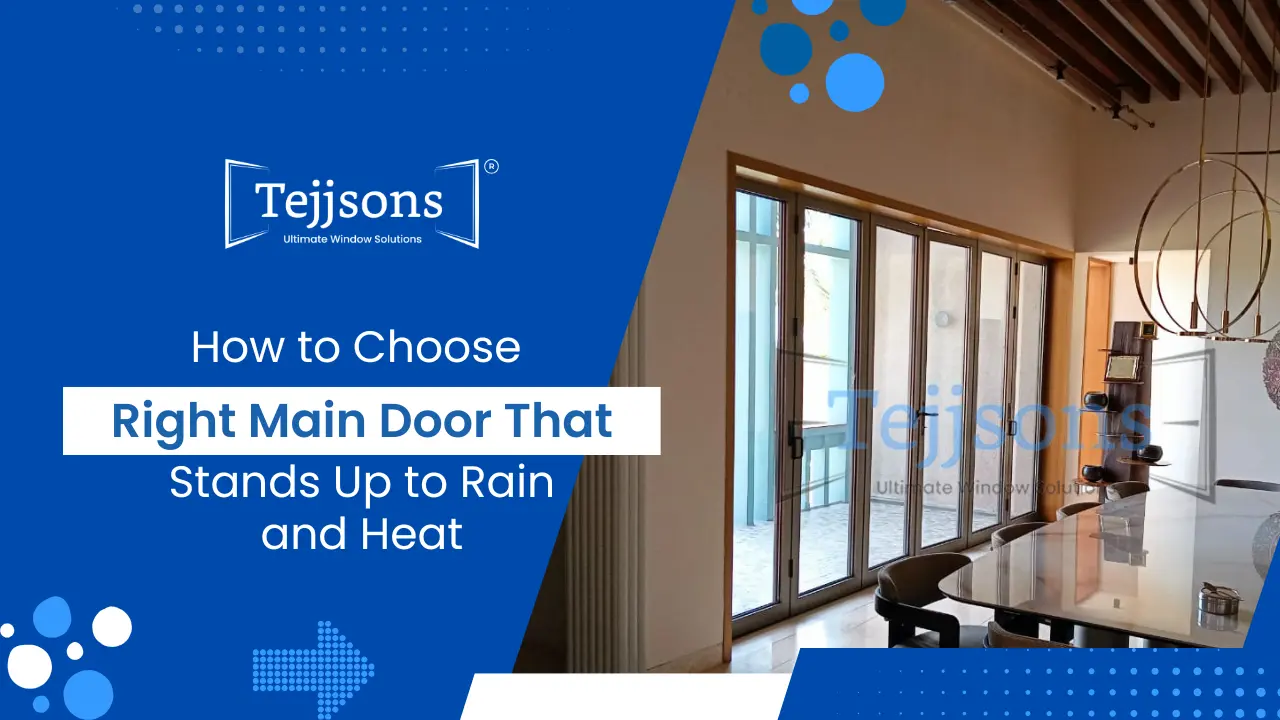
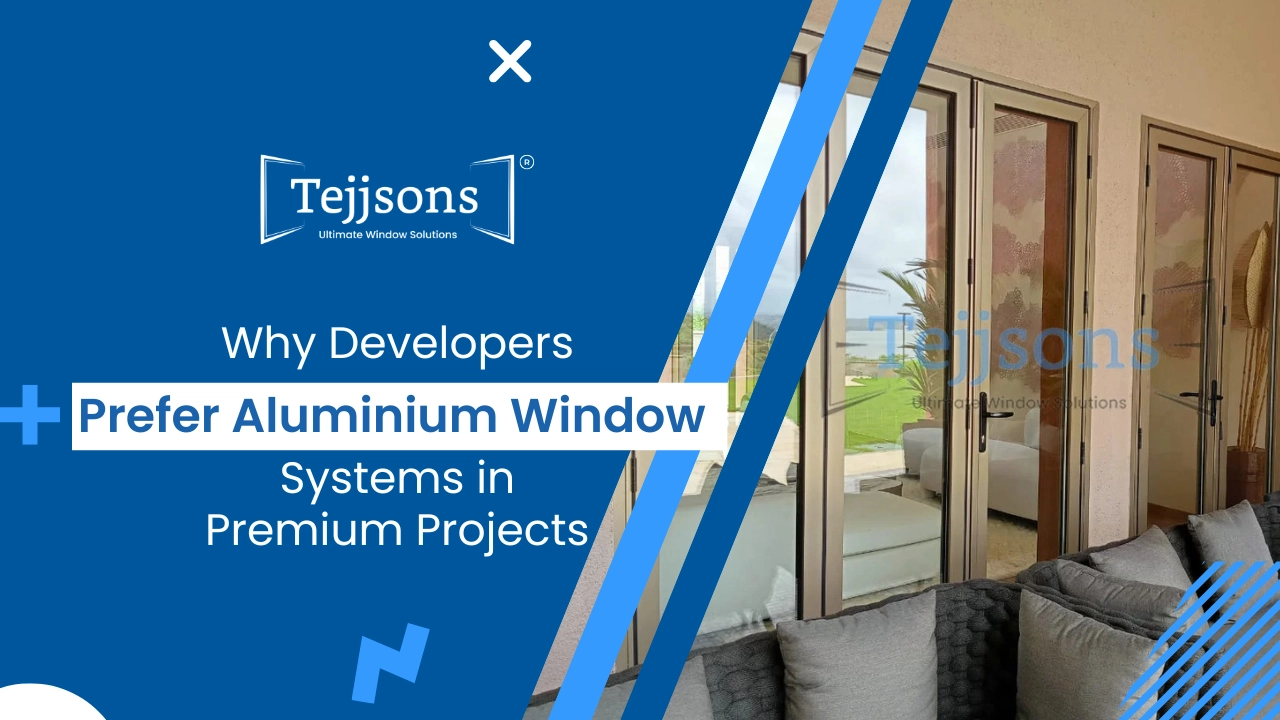
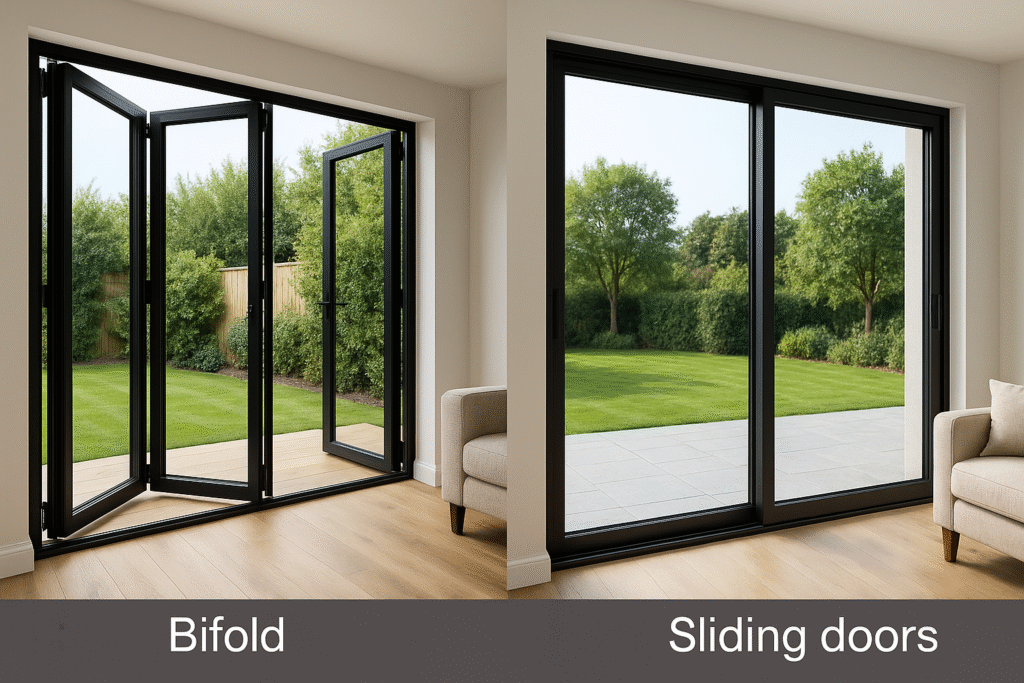
Bifold doors consist of multiple panels connected with hinges that fold and slide along a track, stacking neatly to one or both sides. They’re designed to create wide, open spaces with minimal space requirements, for areas where flexibility and functionality matter.
These doors are perfect for connecting indoor and outdoor spaces, such as opening a living room to a garden, balcony, or patio. Because they open fully, bifold doors allow more light, better airflow, and easy movement, making them a popular choice for modern homes and offices looking for a stylish, space-saving solution.
What Are Sliding Doors?
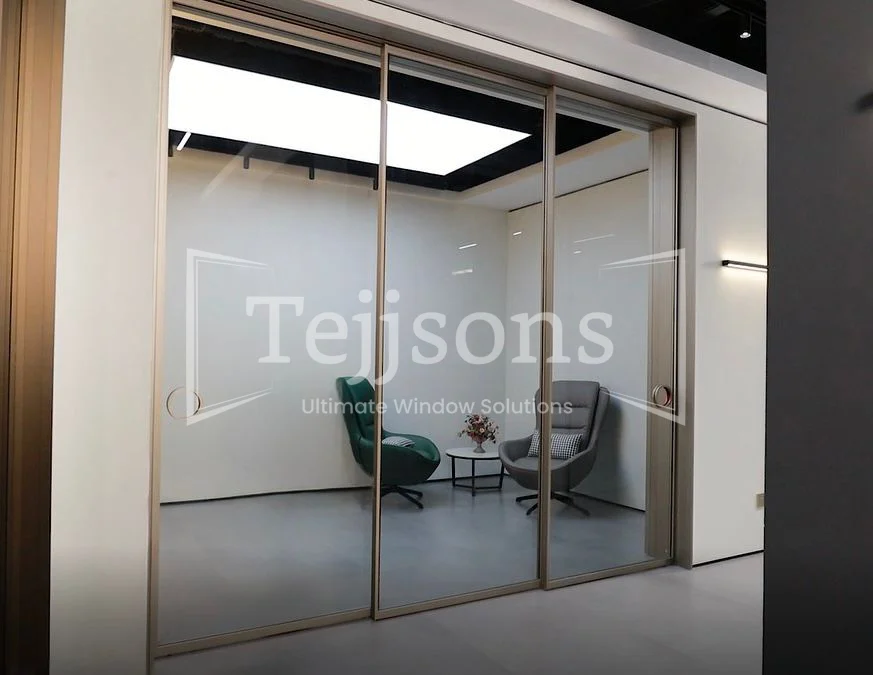
Sliding doors glide smoothly along a track, making them an excellent space-saving option. Unlike bifold doors, which fold or stack, these panels slide horizontally, offering a clean, streamlined look.
With their minimalist design and large glass panels, sliding doors are perfect for maximizing natural light and providing clear, panoramic views of the outdoors. They are especially popular for patios, balconies, and large openings, creating seamless transitions between indoor and outdoor areas.
Whether you’re upgrading a home or designing a commercial space, sliding doors are ideal for achieving a bright, open, and modern feel.
Bifold vs. Sliding Doors – Key Differences & Comparison

When deciding between bi-folding and sliding doors, it is important to compare their features to find the best fit for your space.
Bifold Doors vs Sliding Doors – Comparison Table
| Feature | Bifold Doors | Sliding Doors |
|---|---|---|
| Space Utilization | Panels fold and stack to one side, opening most of the width. Can open inward or outward | Panels slide on a track, save space, but only part of the opening is accessible. |
| Views & Natural Light | Multiple frames may slightly interrupt wide views. | Large glass panels provide better panoramic views and brighter interiors. |
| Ease of Operation | Folding larger panels can require more effort. | Panels glide smoothly and are easier for daily use. |
| Cost | Higher due to multiple panels, premium folding hardware, and detailed installation. Best suited for luxury spaces. | More affordable because of simpler hardware and faster installation, especially suitable for wide openings with large glass panels. |
| Best Use Cases | Great for wide indoor–outdoor openings, patios, balconies, courtyards, and flexible room dividers. | Ideal for patios, balconies, living rooms, and spaces that prioritise big glass views. |
| Aesthetic Style | Modern, dynamic, and flexible design. | Sleek, minimal, and contemporary look. |
| Security | Strong multi-point locking across multiple panels, but more moving joints mean more hardware to secure. High-quality systems offer excellent protection. | Fewer locking points but can be fitted with robust interlocks and toughened glass. Generally secure and reliable for residential use. |
What are the Pros and Cons of Bifold Doors?
Choosing between bi-folding doors and sliding doors often starts with understanding how bifold systems behave in real spaces. Bifold doors are known for flexibility and full-width openings, for homes that need maximum airflow and openness.
Pros of Bifold Doors
1. Wide, Uninterrupted Openings
Bifold doors can fold and stack completely to one side, creating a full-width opening that blurs the line between indoor and outdoor areas. This makes them perfect for patios and living spaces that prioritise openness and natural airflow.
2. Highly Flexible Configurations
You can customise the number of panels, select inward- or outward-folding, and even include a traffic door for everyday use. This design flexibility helps the system adapt to small rooms, large openings, and varied architectural layouts.
3. Brighter, Airier Interiors
With multiple glass sections, bifold doors maximise natural light throughout the day. Homes with small windows or darker corners benefit greatly from the enhanced brightness, which also improves visual spaciousness.
4. Strong Aesthetic Appeal
Bifold doors instantly add a modern, architectural look to any space. Their clean lines, slim profiles, and dynamic folding motion make them a popular choice in contemporary homes, premium renovations, and minimalist interiors.
5. Excellent Ventilation Control
You can partially open one or more panels to control airflow. This allows for gentle ventilation during mild weather or full opening during gatherings, making bifold systems practical all year.
Cons of Bifold Doors
1. Slightly More Effort to Operate
While smooth, the folding mechanism still requires more physical effort than sliding doors, especially when operating larger or heavier panel systems.
2. Slight Interruption in Views
Because each panel has a visible frame, the sightline is not as seamless as large sliding glass doors. Homeowners prioritising wide, panoramic views may find this limiting.
3. Higher Initial Investment
Bifold doors typically cost more due to premium hardware, multiple panels, and detailed installation. They are best suited for mid- to high-budget home improvement projects.
4. Requires Space for Stacking
When opened, the panels need a designated stacking area. In compact balconies or tight interior corners, this folding space may reduce usable floor area.
5. More Components to Maintain
Bifold systems include hinges, rollers, tracks, and multiple moving joints. Regular cleaning, lubrication, and alignment checks are necessary to ensure long-term smooth performance.
What are the Pros and Cons of Sliding Doors?
Sliding doors are ideal for a sleek look with uninterrupted outdoor views. They are especially useful in modern homes where smooth movement and large glass surfaces are a priority.
Pros of Sliding Doors
1. Uninterrupted, Panoramic Views
Sliding doors feature wide glass panels with slim frames, offering clear visibility of outdoor landscapes. Homes with gardens, balconies, or scenic views benefit greatly from the expansive window-like appearance.
2. Smooth, Effortless Operation
The panels glide along a track, making daily use extremely convenient. High-quality rollers ensure quiet movement, which is ideal for families, seniors, and anyone who prefers easy-to-operate door systems.
3. Strong Energy Efficiency
Modern sliding doors feature insulated frames and performance glazing to help maintain indoor temperatures. This reduces heat loss, keeps interiors comfortable, and supports long-term energy savings.
4. Excellent Space Utilisation
Since sliding panels move horizontally instead of swinging or folding, they save valuable interior space. This makes them perfect for compact apartments, living rooms with furniture near entryways, or balconies with limited clearance.
5. Seamless Indoor–Outdoor Connection
Sliding doors create a wide visual opening that connects patios, decks, and balconies to the interior. The smooth transition enhances natural light, making small spaces feel larger and more open.
Cons of Sliding Doors
1. Partial Opening Only
Unlike bifold doors, sliding systems allow only a portion of the total width to open at once. This limits full walk-through access for large gatherings or wide airflow.
2. Track Maintenance Required
Dirt, dust, or small debris collected in the track can affect smooth motion. Regular cleaning is necessary to maintain optimal sliding performance.
3. Limited Design Configurations
Sliding doors offer fewer configuration choices than folding or slide-and-fold systems. In most homes, the design remains limited to a fixed panel paired with a sliding panel.
4. Permanent Fixed Panel
At least one panel remains stationary, limiting ventilation compared to systems that fully fold away. Homes needing maximum airflow may find this restrictive.
5. Possibility of Glass Condensation
Large glass surfaces can attract condensation in humid climates. Occasional wiping is needed to maintain clarity and keep the door looking clean.
Sliding Door vs Bifold Doors: Cost Comparisons
When comparing sliding door vs bifold door costs, pricing depends primarily on hardware complexity, the number of panels, and installation requirements.
| Cost Aspect | Bifold Doors | Sliding Doors |
|---|---|---|
| Overall Price | Higher due to multiple panels and folding hardware. | More affordable with simpler sliding components. |
| Installation | Requires precise alignment; labour cost is higher. | Easier installation with lower labour time. |
| Hardware | Requires multiple hinges, heavier rollers, pivot systems, and multi-track frames, which increases overall hardware cost. | Uses a simpler single-track system with basic rollers and guide rails, making hardware costs lower compared to bifold systems. |
| Best Value For | Full-width openings and flexible layouts. | Large glass views and cost-efficient upgrades. |
Bifold doors have a higher upfront cost, while sliding doors offer a more budget-friendly solution for modern openings.
Read More– Why Aluminium Slide & Fold Doors are Perfect for Indian Homes
Bifold or Sliding doors: Which One is Best for your Luxury Spaces
Choosing between bifold and sliding doors depends on how you want your luxury space to flow, feel, and function. Both systems elevate interiors in different ways, but the right choice comes from understanding how each interacts with your layout.
Bifold doors are ideal for homes that need flexible openings and smooth movement between rooms or outdoor areas. They work beautifully in smaller luxury spaces too, allowing the entire wall to open up and create a wide, welcoming transition to a balcony, garden, or private courtyard.
Sliding doors are perfect when uninterrupted views and a calm, minimalist look are the priority. Their large glass panels bring in generous natural light and create a visually expansive atmosphere, making them especially suited for premium living rooms, poolside areas, and wide patio openings.
Practical Tips
- Use residential bifold doors for compact indoor spaces or as elegant room dividers.
- Choose patio sliding glass doors to achieve bright interiors with panoramic outdoor views.
- Select bifold doors when you need versatility, wider openings, and dynamic movement in your design.
About Tejjsons – Experts in Sliding and Folding Doors

Tejjsons is one of the leading Commercial Aluminium Doors Supplier in India, offering premium architectural window and door systems trusted by homeowners, architects, and design professionals.
Our range includes advanced Slide & Fold doors, Levitation Windows, Slim Aluminium Systems, and innovative add-ons such as Integral Blinds and Smart Glass.
We deliver precision-engineered sliding doors and high-performance folding systems designed to enhance comfort, natural light, and modern living. Every product is crafted for durability, aesthetics, and smooth long-term performance.
Ready to upgrade your home or project? Get quote today to know the complete range and find the perfect system for your space.
Recommended Reads
- Minimal Systems Aluminium Doors for Your Dream Home
- What are the Benefits of Using Motorized Blinds?
- How Smart Glass Offers a Minimalist Interior Design For Offices
FAQs
Which is better, sliding doors or bifold doors?
Both sliding and bifold doors have unique benefits. Sliding doors are ideal for large openings and provide uninterrupted views, while bifold doors are better for creating wide, open spaces with maximum access. Your choice depends on your space and functional needs.
Do bifold doors add value to your luxury home space?
Yes, bifold doors can significantly increase your property’s value by their aesthetics, providing better indoor-outdoor connections and improving natural light in the home.
Why are bifold doors going out of fashion?
Bifold doors need clearance to open, making them less practical for small spaces. Sliding and pivot doors are gaining popularity for their space-saving and modern designs. However, bifold doors are still widely used.
What is better than a bifold door?
Sliding doors save space, pivot doors offer the look, and French doors add a classic touch. The best option depends on your space and style, but bifold doors remain versatile.
Do bi-fold doors make a room hot?
Poorly insulated bifold doors can heat a room during the summer. However, modern bifold doors with thermal efficiency are designed to maintain a comfortable indoor temperature regardless of the season.
Are sliding doors better than bifold doors?
Sliding doors are better when your priority is wide glass views, smooth daily operation, and a minimal, streamlined look. Bifold doors are better when you need a full opening and maximum access to outdoor areas. The “better” choice depends entirely on your space and how you intend to use it.
Are bifold doors more expensive than sliding doors?
Yes, bifold doors are generally more expensive because they use multiple panels, advanced hinges, and more complex folding hardware. Sliding doors require fewer components, making them the more cost-effective option for large openings.
Which doors provide better insulation?
Both sliding and bifold doors can provide excellent insulation when built with thermal-break aluminium frames and high-performance glazing. Sliding doors generally offer slightly better insulation because their design includes fewer moving joints and larger, sealed glass panels. High-quality bifold doors also maintain strong temperature control when manufactured with proper sealing, durable gaskets, and insulated profiles.